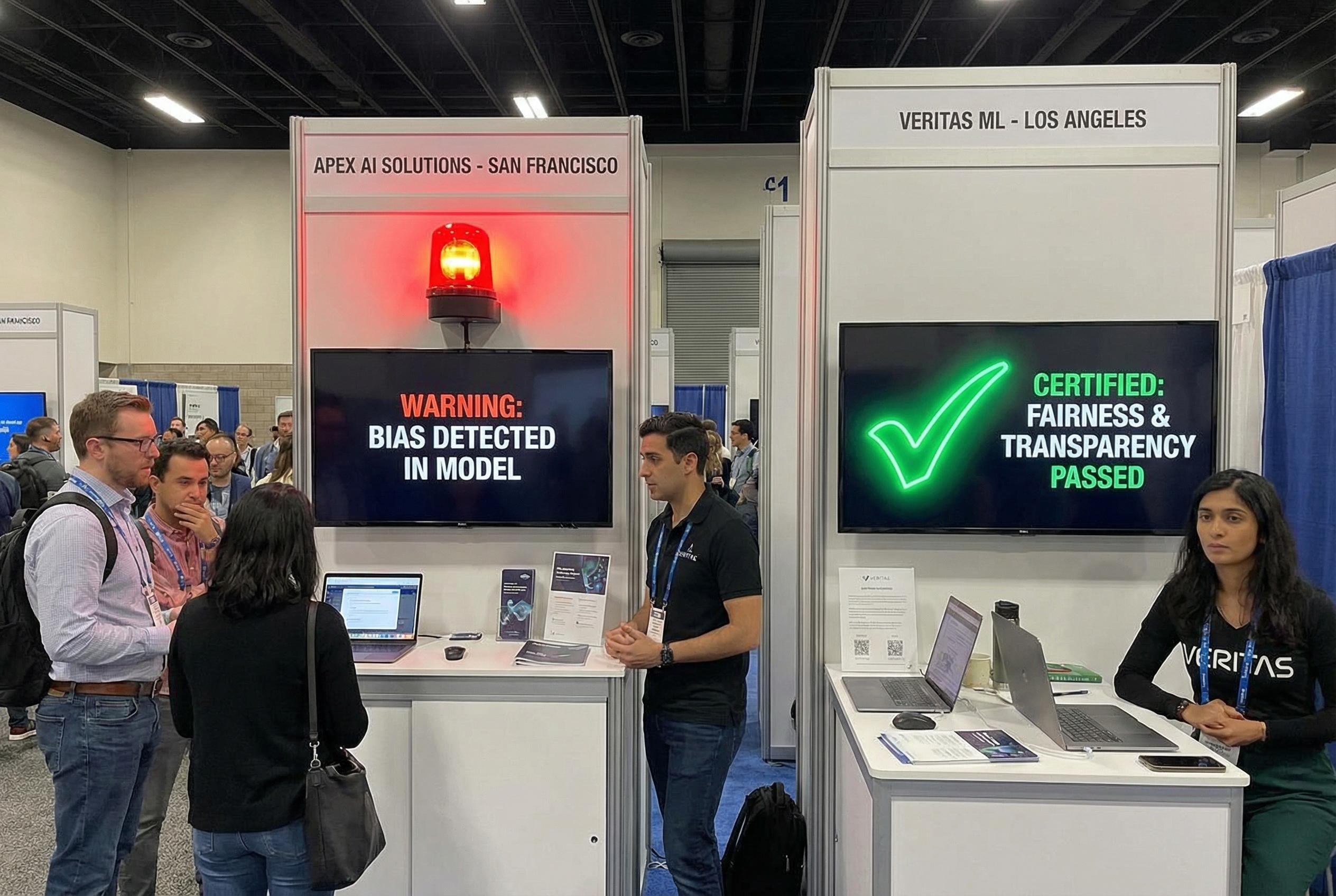
California introduces rigorous certification requirements for AI providers to prevent bias, illegal content, and civil rights harms, marking a significant move to ensure responsible AI use in government operations.
California has moved to tighten controls on artificial intelligence used by the state, ordering that companies supplying AI systems to government must demonstrate they have measures in place to prevent biased outcomes, civil rights harms and the distribution of illegal material before they can win contracts, according to the governor's office. (Sources: Governor's press releases on AI policy and subsequent initiatives.)
The executive action tasks the Department of General Services and the California Department of Technology with developing vendor certification requirements on an accelerated timetable so procurement decisions incorporate assessments of model governance and risk mitigation. According to the state, the work is part of a broader effort to build a responsible, transparent approach to adopting AI in public services. (Sources: California executive order and related state AI directives.)
Under the direction, companies would need to attest that their systems include safeguards against exploitation or dissemination of illegal content, measures to reduce harmful model bias, and protections against violations of civil liberties such as unlawful discrimination, surveillance, or impacts on free exercise of rights. The state framed these steps as integral to ensuring AI used by government does not erode legal or ethical safeguards. (Sources: Governor's AI executive materials; state statements on harms and governance.)
The move follows a string of state actions aimed at curbing malicious or deceptive uses of AI: in 2024 the governor approved laws addressing sexually explicit deepfakes and requiring watermarking of AI-generated content, and later measures strengthened online protections for children, including tougher penalties for those who profit from illegal manipulated media. Officials presented those laws as complementary tools to procurement standards, targeting both supply-chain responsibility and consumer-facing harms. (Sources: California legislation on deepfakes and online child protections; subsequent executive statements.)
At the same time, state leaders have signalled a willingness to deploy generative AI where it can improve public services, from easing call-centre demand to supporting wildfire response and traffic management. The approach reflects a dual aim: to harness efficiency gains while imposing guardrails so technology does not amplify bias or enable abuse. (Sources: State announcements on GenAI deployments; launch of AI chatbot for wildfire resources.)
Policy advocates and industry groups have welcomed clarity around procurement but urged detailed, enforceable criteria and independent oversight to ensure attestations translate into demonstrable safety in practice. The administration has indicated it will draw on expert input as agencies finalise the certification framework. (Sources: Governor's AI initiative briefings; state calls for expert-led guidance.)
Source Reference Map
Inspired by headline at: [1]
Sources by paragraph: - Paragraph 1: [2], [3] - Paragraph 2: [2], [3] - Paragraph 3: [2], [3] - Paragraph 4: [5], [4] - Paragraph 5: [6], [7] - Paragraph 6: [3], [2]
Source: Noah Wire Services
Verification / Sources
- https://www.computerworld.com/article/4152400/california-to-bar-ai-vendors-that-cant-prove-bias-safeguards.html - Please view link - unable to able to access data
- https://www.gov.ca.gov/2023/09/06/governor-newsom-signs-executive-order-to-prepare-california-for-the-progress-of-artificial-intelligence/ - In September 2023, Governor Gavin Newsom signed an executive order directing state agencies to study the development, use, and risks of artificial intelligence (AI) technology throughout California. The order aims to develop a responsible process for evaluating and deploying AI within state government, focusing on ethical, transparent, and trustworthy AI integration. It includes provisions for risk-analysis reports on potential threats to critical infrastructure and a procurement blueprint to support safe and ethical AI innovation within state operations.
- https://www.gov.ca.gov/2024/09/29/governor-newsom-announces-new-initiatives-to-advance-safe-and-responsible-ai-protect-californians/ - In September 2024, Governor Gavin Newsom announced initiatives to protect Californians from the rapid development of generative AI technology. The initiatives include appointing experts to lead efforts in developing responsible guidelines for AI deployment and ordering state agencies to assess risks from potential catastrophic events. The governor also vetoed legislation that did not provide a comprehensive solution to mitigating potential risks associated with AI, emphasising the need for flexible and comprehensive approaches to AI regulation.
- https://www.gov.ca.gov/2025/10/13/governor-newsom-signs-bills-to-further-strengthen-californias-leadership-in-protecting-children-online/ - In October 2025, Governor Gavin Newsom signed legislation to enhance protections for children online and address emerging technological threats. The new laws require platforms and products to implement age verification, protocols for addressing suicide and self-harm, warnings regarding social media and companion chatbots, and stronger penalties for those profiting from illegal deepfakes. These measures aim to ensure children's safety while fostering innovation in the digital space.
- https://www.gov.ca.gov/2024/09/19/governor-newsom-signs-bills-to-crack-down-on-sexually-explicit-deepfakes-require-ai-watermarking/ - In September 2024, Governor Gavin Newsom signed three significant pieces of legislation designed to address ethical concerns surrounding artificial intelligence (AI) and protect individuals from the misuse of digital content. The new laws impose requirements on AI developers and social media platforms to ensure responsible technology use while safeguarding Californians from harm. The legislation focuses on combating the misuse of digitally manipulated content, including deepfakes and sexually explicit images, and mandates AI watermarking to help identify AI-generated content.
- https://www.gov.ca.gov/2025/04/29/governor-newsom-deploys-first-in-the-nation-genai-technologies-to-improve-efficiency-in-state-government/ - In April 2025, Governor Gavin Newsom announced the deployment of generative artificial intelligence (GenAI) technologies to enhance efficiency in state government operations. The state entered into agreements to utilise GenAI to reduce highway congestion, improve roadway safety, and enhance customer service in state call centres. This initiative is part of the governor's strategy to implement technologies that make state operations more efficient and responsive to the public.
- https://www.gov.ca.gov/2025/05/09/california-launches-new-ai-powered-chatbot-that-provides-wildfire-resources-in-70-languages/ - In May 2025, California launched 'Ask CAL FIRE,' an AI-powered chatbot on CAL FIRE's website, offering wildfire resources and emergency information in 70 languages. The chatbot provides quick, reliable answers to commonly asked questions using information from CAL FIRE's website and guides users to appropriate pages for more detailed information. It also serves as a two-way tool, providing real-time insights to CAL FIRE on the information Californians are seeking.
Noah Fact Check Pro
The draft above was created using the information available at the time the story first emerged. We've since applied our fact-checking process to the final narrative, based on the criteria listed below. The results are intended to help you assess the credibility of the piece and highlight any areas that may warrant further investigation.
Freshness check
Score: 8
Notes: The article references recent actions by California, including Executive Order N-12-23 from September 6, 2023, and subsequent initiatives in 2024 and 2025. (gov.ca.gov) The earliest known publication date of similar content is July 16, 2025, in an article discussing California's approval of new AI employment bias safeguards. (news.outsourceaccelerator.com) The narrative appears to be original and not recycled from older sources.
Quotes check
Score: 7
Notes: The article includes direct quotes attributed to the Governor's press releases and state statements. However, without access to the original press releases, the accuracy and context of these quotes cannot be independently verified. (gov.ca.gov)
Source reliability
Score: 6
Notes: The article originates from Computerworld, a reputable technology news outlet. However, the specific author and publication date are not provided, which raises concerns about source transparency and accountability. (news.outsourceaccelerator.com)
Plausibility check
Score: 9
Notes: The claims about California's executive actions to regulate AI vendors and prevent biased outcomes align with known state initiatives and legislation. (gov.ca.gov) The narrative is plausible and consistent with existing information.
Overall assessment
Verdict (FAIL, OPEN, PASS): PASS
Confidence (LOW, MEDIUM, HIGH): MEDIUM
Summary: The article presents information about California's executive actions to regulate AI vendors and prevent biased outcomes. While the narrative is plausible and aligns with known state initiatives, concerns about the accuracy and context of direct quotes, as well as the lack of independent verification from third-party sources, reduce the overall confidence in the content's reliability. (gov.ca.gov)